Quote:

“A nation that continues year after year to spend more money on military defense than on programs of social uplift is approaching spiritual death.”--Martin Luther King

Tuesday, March 22, 2011

Gone and Missed (Roger Blakely III)

My great friend Roger Blakely III died a year ago in a bizarre tragedy on the freeway near Albany, Oregon. Attempting to cross the road on foot, he was struck by a southbound car and died at the scene.

Roger was coming home to Portland after spending a few years in California where he attended college, first at a JC in the Los Angeles area, then at Humboldt State on the northern coast. Though born and raised in SoCal, he loved Oregon, particularly Portland, having lived here for a decade before beginning his studies in California.

Roger was a gifted man, though sometimes he was unaware of that, inasmuch as he could put himself down with the best of us. He got too much into the drink at times as well, like many a soulful person, but he was a loving man even when he occasionally crossed his pals.

Around 2005 I was taking classes at Portland State and I'd written a poem that I thought might have something to it. I showed it to Roger, who really seemed to understand it and praised it with his usual dry reserve. The poem is called "Cello Music," and it is actually about a beautiful woman I know, but one might say it is also about beauty in general.

It was fitting that Roger "got" the poem, for he once trained on the instrument and loved the cello sound. The inherently beauteous sound that a great artist can draw from the cello.

When he lived in Arcata in northern California he once wrote and requested that I send him "Cello Music." I guess he had lost the copy I'd given him years before.

He remembered the poem.

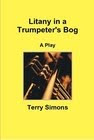
Last month I published a book of my poetry here at Round Bend Press--"Cello Music & Other Poems." I dedicated the book to Roger.

Sadly, that is all I could do for him in the end. All his friends in Portland miss him terribly.

Terence and I raised a toast to his memory just this last weekend.


TS

Too Little, Too Late

This one is too focused to ignore, too right on, too near the essence:

"If protecting civilians from evil dictators was the goal, though -- as opposed to, say, safeguarding natural resources and the investments of major oil companies -- there’s an easier, safer way than aerial bombardment for the U.S. and its allies to consider: simply stop arming and propping up evil dictators. After all, Libya's Muammar Gaddafi reaped the benefits from Western nations all too eager to cozy up to and rehabilitate the image of a dictator with oil, with those denouncing him today as a murderous tyrant just a matter of weeks ago selling him the very arms his regime has been using to suppress the rebellion against it."

Here is the rest of the story from Benjamin and Davis at CommonDreams.

I know I said I wasn't going to post much from the leftist press because you already know the truth. But this piece hits the mark in so many ways I couldn't resist.


TS

Friday, March 18, 2011

Ho Hum for Now

A friend of mine once said, regarding basketball, "Do they still use one ball in that game?" Funny line, I used it in an ad I put together when I worked at a semi-sports pub years ago. Quoted my friend too, the ceramic artist Charles Lucas.

At the time I was a huge March Madness fan and really looked forward to the games. My interest has been waning over the subsequent years.

I don't love the tournament the way I once did. I don't know why, really, except everything looks the same. There's a tinge of mediocrity in the tourney, for the best players leave college in a "one and done" circus and sign professional contracts.

Quite frankly it is beginning to bore me, like much else in life these days. Of course, if the University of Oregon ever gets back to the tournament, my interest will probably rise again, at least relative to the Ducks.


TS

Tuesday, March 15, 2011

Poem


A small favor (or something)


You know I
am full of bullshit
but I request of you
a small favor (please)
play along

Listen
we haven’t time
to waste and we
have (too much) much
to do to keep pace
with things that
need be done

(Or we have
nothing to do in
the existential view but
no matter
moving on)

I implore you
to play along while
the chorus sings
and the world sinks
(as we swim)
to the nearest shore

(If indeed a shore
is there which it may
very well not
be) but which likely is
there (if but a dot
on the horizon)

Think
to see
and to finally attempt
the impossible
(for it may be
somewhat plausible to
play along with
my bullshit just
this once)
for
I may have
the answer (perhaps)

Before dinner
(and only
if you want
to eat of course)
please grant me
a small favor
or something like
that and do
not mention this
ever happened (that
is me seeking
a favor) to
anyone.


TS

Revisiting Kees' Robinson


In conversation with a friend over the weekend about things worth reading, I discovered my pal wasn't familiar with this tremendous Weldon Kees poem, which I've cited here before, but which is well worth reposting. Kees remains one of my favorite writers.


Aspects of Robinson

Robinson at cards at the Algonquin; a thin
Blue light comes down once more outside the blinds.
Gray men in overcoats are ghosts blown past the door.
The taxis streak the avenues with yellow, orange, and red.
This is Grand Central, Mr. Robinson.

Robinson on a roof above the Heights; the boats
Mourn like the lost. Water is slate, far down.
Through sounds of ice cubes dropped in glass, an osteopath,
Dressed for the links, describes an old Intourist tour.
—Here’s where old Gibbons jumped from, Robinson.

Robinson walking in the Park, admiring the elephant.
Robinson buying the Tribune, Robinson buying the Times. Robinson
Saying, “Hello. Yes, this is Robinson. Sunday
At five? I’d love to. Pretty well. And you?”
Robinson alone at Longchamps, staring at the wall.

Robinson afraid, drunk, sobbing Robinson
In bed with a Mrs. Morse. Robinson at home;
Decisions: Toynbee or luminol? Where the sun
Shines, Robinson in flowered trunks, eyes toward
The breakers. Where the night ends, Robinson in East Side bars.


Weldon Kees


TS

Monday, March 7, 2011

Billy Bragg and Beef Tips


I'm ripping some Billy Bragg into my computer, testing Billy's egalitarian streak. No royalties, baby. But you are the best.

I'm having beef tips with veggies and rice tonight, and a glass or two of wine.

Isn't life grand?

And I almost forgot. I'm listening to John Prine and cooking a corned beef slab in my crock. I'll add carrots, onion, cabbage and potatoes tomorrow. Goin' Irish early this year!

So life is doubly grand.


TS

Saturday, March 5, 2011

Before David Brooks


David Brooks, of New York Times punditry fame, weighs in with a re-evaluation of Samuel Huntington's famous essay and later book, "Clash of Civilizations" (see link below). Brooks says Sam H. may have gotten things a little skewed, which is what I said back in
2005.

Here is my essay on Huntington from the winter 2008 Oregon Literary Review.


Corporatism


London calling to the faraway towns
Now that war is declared-and battle come down
London calling to the underworld
Come out of the cupboard, all you boys and girls
London calling, now don't look at us
All that phony Beatlemania has bitten the dust
London calling, see we ain't got no swing
'Cept for the ring of that truncheon thing


"London Calling" The Clash


Samuel P. Huntington argues in his 1993 essay The Clash of Civilizations that future world conflict will center on religious and cultural ideas rather than traditional battles among nation- states that grew up after the Treaty of Westphalia, in 1648. Prior to the treaty, conflict arose from the economic and territorial interests of princes, emperors and monarchs, Huntington notes. With the subsequent rise of nation-states, nationalism bred conflicts between masses of people, as aristocracies and their elite armies lost power and new ideological concerns replaced them. Thus grew democracies and classical capitalism, followed by the antidotes of fascism and communism. That style of conflict is all gone, Huntington argues, replaced by nascent religious and cultural conflicts.

This is an interesting theme, but in the end it falls to pieces. What is more apparent now is a provocation by the emerging corporate fascists of the West against Middle Eastern nations which refuse to play along with the West’s extremely self- aggrandizing conceptualization of democracy. The provocation is rooted in the old capitalistic doctrines of colonization. Any concerns for cultural ideology, including Huntington’s, are disingenuously designed to disguise the hegemonic and classical capitalistic maneuvering of the West. For instance, the point of the conflict between the West and the oil producing countries of Iraq and Iran is overwhelmingly economic (Taliq Ali refers to the U.S./Iraq war as a recolonization), and not religious or cultural. If one looks carefully at the Christian and Muslim faiths and the cultures which support them, and honestly evaluates the degree to which the masses are involved in religious discordance, a “clash of civilizations” is resoundingly quiet. On the other hand, a look at the leadership of the Western and Middle Eastern nations is depressive.

Iran is led by religious zealots at the moment, but the people there are divided as to the function of religion in the political realm. Fascism, more than religious and cultural phenomena is stirring the politics there. The same could be said regarding the U.S., where a “born again” Christian has manipulated the U.S. Constitution to create an executive strangle hold on a reluctant legislative body. In both instances, politicians and their corporatist associates formulate the ideological debate for their people without meaningful religious and cultural components, as they have since the advent of modern capitalism and the withering of the Church in state affairs. This formulation is only now being refined into an advanced stage of corporate fascism.

Until they revolt, the people are important within the context of corporate fascism only inasmuch as they confirm and support corporatism's’ ideologies, which are separate from any meaningful religious or cultural qualities. Cultures are, as Jose Ortega y Gasset notes in "Revolt of the Masses," too diversified in their structure to be merely political. The less political people are the easier it is for elites to control them and thence carry on with the more important agenda—the accumulation of wealth. Cultural and religious “problems” make convenient scapegoats, then, as one sniffs out the next big movement threatening corporatism.

All of this is to say that the ideological and economic consequences of nationalism will not soon disappear, as Huntington suggests when he says the end of the Cold War has created a new phase in world politics. What he has done in his essay is place, without much evidence, the blame for the world’s political instability on religious and cultural differences. He supports corporatism’s newest shibboleths of economy by extolling, without much support for his argument, the beneficence of economic globalization. His assumption is that globalization is ultimately good. His argument reveals a concern for protecting that precept rather than seriously examining the effects of globalization on the cultures and economies of the Developing Nations. (We don’t call the Third World by its old name now, because those nations are after all doing so well under globalization).

Huntington’s essay is already dated. The future is here and the conflicts of this moment are yet rooted in nationalism, economic inequality, corporate greed, world poverty, civil war, disease, and terror. To place the root cause of conflict in cultural and religious contexts without examining socioeconomic and capitalistic ideology with a more discerning analysis is shallow. Civilization is fine. It is misconstrued and shoddy political ideology that is problematic.

-------

So there. Call me prescient, or whatever you like.

Here is Brook's essay.


TS

Sunday, February 27, 2011

Poem


To My Muse Early in the Morning

1

the touch of
your fingers on
my balls!
the
drunkard’s wine
the killer’s
bullet
not even
they compare
nor give as much pleasure
nor measure up

the touch of
your fingers on
my balls is
an opiate
my love!

it is an
ecstasy finer
than the sheerest dream
finer than reams
of exquisite prose!

my lovely
lovely muse
I have it in for you
as you do
for me

let us dance
together tonight
on an imaginary
floor
in an
imaginary room
in an imaginary
world
clinging like
insects to
our indomitable lust
us and
and nothing more


2

I knew that day
and the day before
as you walked the
path along
the river

I was yours
under a sweat-soaked
sun
to do with
to hurt
to laugh
to weep

what’s more
you leaned against
the riverwall
and beckoned me
like a whore

on your lips
the words formed
like molded sweets—
come dumb poet
you pathetic man
into my arms
you
need me

how could I resist
such a clear song?
what man could
other than the killer
or the dead?


3

on our first date
you did not hesitate
to tell me
I ruined the years
before that day

your honesty!
your bitchiness
impressed me so
I began to ruminate
while denying
your real ambition—
to touch my
balls was
your solution

with some care
and contrition
I allowed you the
opening move
a tremulous hand
under the table
flitted against
my knee and then
and then
the coffee in
the cup before me
swirled up
like an ocean swell
and drained
out in my lap

a small case
of the nerves
I imagine!

but I wanted
you my lovely
lovely muse
how I ached
for you!


4

we have been
together now for years
with your fingers
touching my balls
and you have only
gotten better
how can a man
at sixty be so childlike
I wonder?
so full of
love for his
muse that he feels insane?
so confused
yet clear in one thing—
that his muse’s
touch is all
he can claim?


TS

Tuesday, February 22, 2011

Idiot of the Week/Scott Walker


Any questions?


TS

from Cello Music & Other Poems


The line came to me and I really didn't know what to do with it. So I turned it into something that may or may not resemble a poem.


The Bright Ones Run Alone into the Night

the lights come on at
six-thirty every morning
but you don’t care because
you’re already gone in your mind

you were up at 4 a.m.
gulping the swill coffee

you’ve taken a piss and shaved
and counted your money

you haven’t slept
but getting out of this place
is more important than sleep
and you want fresh air

you knew what it would
be like here
before you arrived
your back stooped
all you own in a shoulder bag
your empty pages
stuffed in a single side-pocket

at check-in you
gave them a name
but you’re uncertain whether
you have spoken
your name or the name
of a dead man

they want to know who
sent you and where you’re from
but they don’t care
how you got here or why

looking around
you realize you’ve fallen
into a trap

the snoring is a coded message
a riddle you must solve
on your own—but your life
has become an unanswerable lie
as you walk out the door

tonight
returning to your bed
amid the stench and piles of
cheap crime novels
you will see the bright
ones run alone
into the night


TS

Monday, February 21, 2011

from Cello Music & Other Poems


The title poem from my latest collection.


Cello Music

I imagine pulling a bow
across your strings
and hearing your voice as you
respond to my expert playing

You are softer than you seem
as I bow and pluck you—

Delirious arpeggios
staccato riffs
sustains
rests
shimmering
tremulous sounds cascade down

I imagine playing you slowly
under water with a crush
of current against my chest

My left hand drifts
to your slender neck as
I bow and improvise;
my right hand moves in perfect
union with your perfect pitch

I imagine playing you on
a sleepless night
I sit up in bed and lay you
across my thighs and
play you with such ease you
begin to moan and cry
while the neighbors
listen to cello music.


TS

Monday, February 14, 2011

A New Book

I've put a new collection of poems together. This is some recent work and a few droppings I've been playing with over the past few years. I've spent recent days attempting to polish this and make it work. Here is a sample:


When a Man Grows Old

When a man grows old and his
energy ebbs he turns to writing poetry
When a man grows old women look
beautiful but what can he do
When a man grows old he resents the
machinations of politicians and kids
When a man grows old and his teeth
turn yellow he scorns his friends
When a man grows old his poetry leaves
him empty until he drinks a beer
When a man grows old night becomes
stranger than the days of his past
When a man grows old time flows
backward to a sense of what lasts

TS

Three for the Road

Here is what I'm listening to today. James Low, a recording he made at Mississippi Studios in NoPo, which includes a cover of John Prine's "Pretty Good". I'm a huge Prine fan and Low does it more than justice.

I'm listening to some middle period Dylan, "World Gone Wrong," which certainly seems to be the case at times. It is always swell to ponder Dylan. He's 70 now, imagine that.

And thirdly, I'm revisiting The Dillards. "The Early Recordings--1959." I was eight when this recording was made. And I didn't discover it until years and years later.

If you could pick up all the pieces of the things you have missed and then discovered late in life, reassemble them and tack on the years that you slept through, everything would be that much better.


TS


Tuesday, February 8, 2011

What Revolution?

The Egyptian revolt is an interesting case study, isn't it? What I find remarkable about it is how it drives home how power actually functions in a nation once the rhetoric has diminished and realpolitik takes over.

Naturally, a compromise is being sought among the elites who actually control the nation, as a few of the usual brokers have arrived with made-over resumes. Among them are the killers and thieves who a month ago were right there with Mubarak of course. They're attempting this with the West watching carefully over their shoulders, making sure things are done just right so as to not threaten U.S. and E.U. influence in the region.

It is silly to think that anyone from outside the Egyptian power elites will crack the lineup and change things--though obviously some change will have to occur. How much is the only question. The people have become a terrible distraction all of a sudden; a bone or two will be tossed their way. But the usual suspects will prevail.

In the U.S. we have these ridiculous elections (as opposed to meaningful ones) that make a mockery of freedom by not providing much real leeway in policy, institutional revitalization, or substantive change. One set of power brokers leaves, another fills the void. But look, both sets are usually always made up of the same troupe of puppets and influence peddlers. That's politics. Slimy stuff.

Obama couldn't have gotten there without appeasing the filthy rich "liberal" corporate sect. Before him, GWB had to take his lumps from the "conservative" corporate sect. Not much is different between them, though I actually believe Obama is the smarter and funnier of the two.

In Egypt, as elsewhere, follow the money.


TS

A Spring Project

I've been listening to a lot of jazz lately, and that always make me think of Lee Santa, a huge jazz fan and photographer who lives over in the Idaho panhandle near Sandpoint.

I used one of his photos for the cover of the Round Bend anthology of poems (Cold Eye) that is now up at both Amazon and Lulu, and I think Lee is a special shooter. I particularly like his black and white work of the jazz greats, which are collected here, along with much of his other work.

I'm after Lee to let Round Bend publish a book of his work. He sounds amenable. I'd like to get going on it this spring, after the deep snow leaves Idaho and I conjure the energy I'll need to make the project work.

The photo is of Sonny Rollins, one of my favorite saxophonists.


TS